Training Your Head to Climb Harder
Sabrina Thayer-Head on the mental preparation that led to her best competition season on the Coupe Québec circuit.
photo Benjamin Bouchard
Coming back from an injury, Sabrina had no expectations for her 2019–2020 competition season. She surprised herself with a season full of finals, podiums and lessons. In this article she opens up and shares what was behind it. The mental side is an aspect climbers neglect far too often. Her perspective is refreshing, full of practical tips, and carries over well beyond competition climbing.
When I started competing last year, I knew I wasn’t going to be the best on the circuit and that there was a chance it just wasn’t for me. The pressure, the performance anxiety, the failure, results published for everyone to see that make comparison more or less inevitable — these are aspects of the sport that can make it harder than you’d like, and they’re difficult to address.
I chose to throw myself in, and I surprised myself by genuinely loving competition, on top of watching my climbing ability climb steeply with my new lifestyle. After a disappointing first year and an injury over the summer, I was ready to make changes for my second season, and I joined the Bloc Shop team.
At the start of that second season, still recovering, I noticed a definite improvement in my fitness, my technique and my general approach. I learned a lot from my new team in a short time, but one important piece was still missing: my head. It had been my biggest weakness the year before and it was following me into the next one. So I decided to devote the season to working on it, to build the best possible base before pushing to a higher level later. Here’s what I took from that season.
1. Focus on your ultimate goal
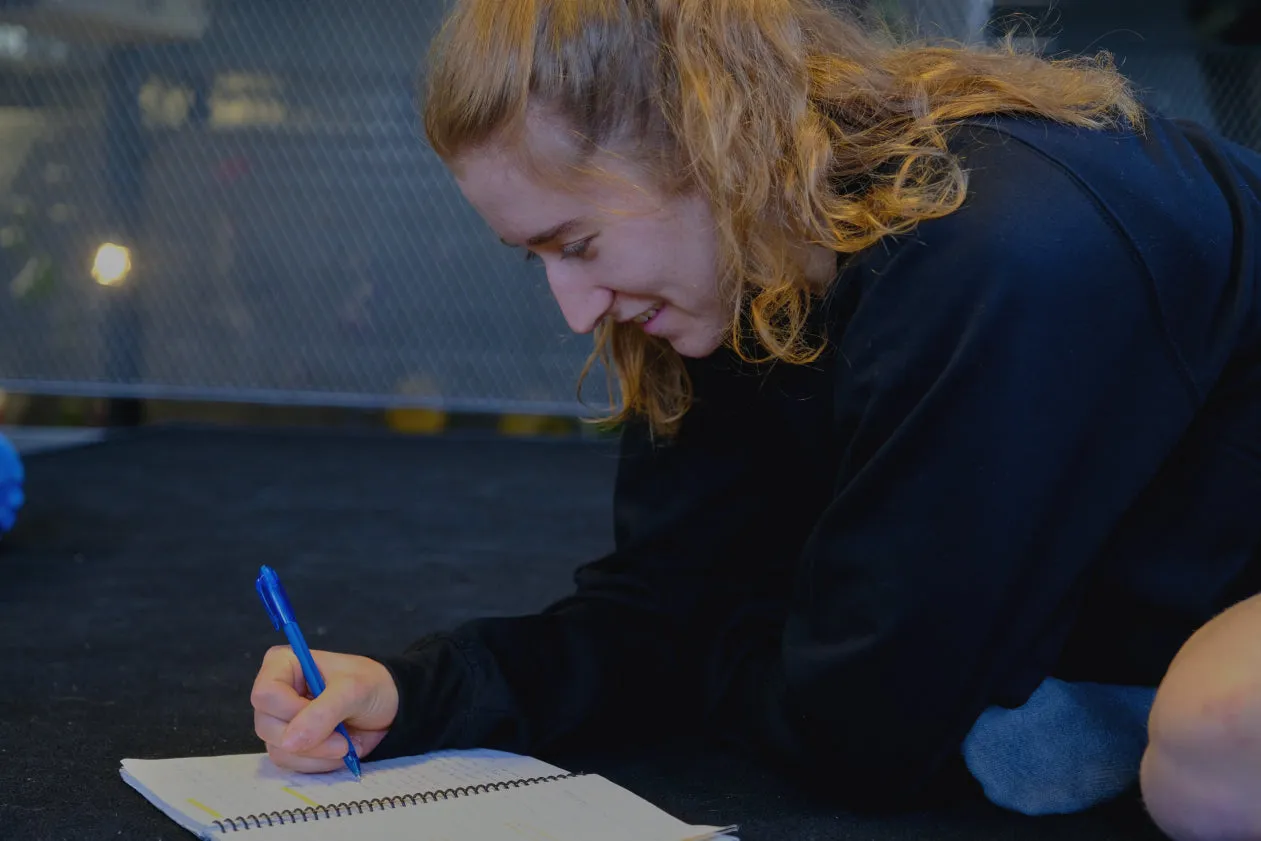
photo Catherine Deziel
This is probably the biggest change I made this year. By establishing what I actually wanted to accomplish, in training and in competition, I managed to shrink the importance I was giving to outside factors like what other people thought.
A good way to do this is to understand why you climb. Long term, I have an ultimate goal and I know that’s what I’m working toward. My main route to it is becoming better. I want to learn and practise movements, challenge myself, and have no weaknesses. So that’s where my focus stays.
In competition, I concentrate on what I can understand from each attempt and what I can improve. In training, that’s the time to use those observations and practise getting better. With your ultimate goal clearly in mind, you can slowly start eliminating the outside factors that limit you: the image others have of you, their opinions, embarrassment, fear of failure, self-consciousness.
2. Climb for yourself, not for others
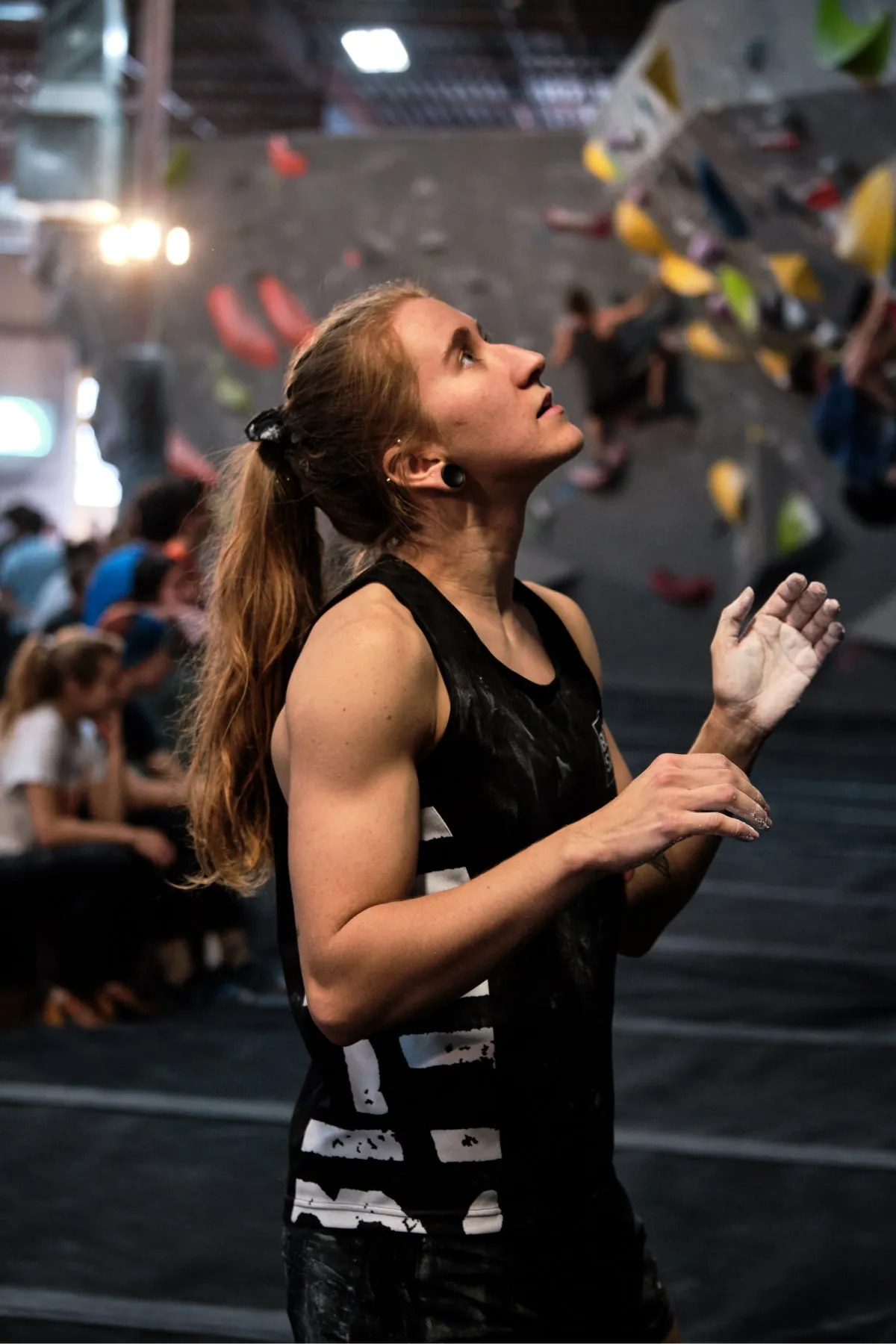
photo Catherine Deziel
The difference between climbing for yourself and climbing for others can be hard to see. To work it out, you can ask whether your satisfaction comes from the successes you have — however you define them — or from other people’s recognition of those successes. In the age of social media it can be difficult not to fall into that trap, but when you find how to genuinely climb for yourself, that’s where you see the best progression and the strongest motivation.
There are two things I use to make sure I keep climbing for myself.
Personal objectives
For my objectives, I aim at things I can work on that aren’t connected to other people. I might concentrate on specific movements, grips, or particular physical strengths — those are my technical objectives. Then I can have objectives about my behaviour: around fear, working toward a more positive attitude while climbing, changing my intensity level, having more fun, or comparing myself to others less.
Those kinds of objectives, centred on my own capabilities, always push me to improve more than objectives tied to a result, a grade or a ranking.
Visualise your behaviour
It’s also important to pay attention to how you picture yourself succeeding. Instead of imagining yourself doing something nobody else has done, you can imagine yourself succeeding after giving everything you had. When you visualise yourself climbing, you should picture the movements as if you were on the wall, rather than taking the view from the crowd.
How you build those scenarios can be a good indicator of what actually satisfies you. Shifting that thought toward something centred on yourself will change your attitude and your approach too.
In short: by making sure you’re climbing for yourself and not for others, you can remove a certain amount of pressure and stay motivated for longer.
3. Orient toward the task, not the result
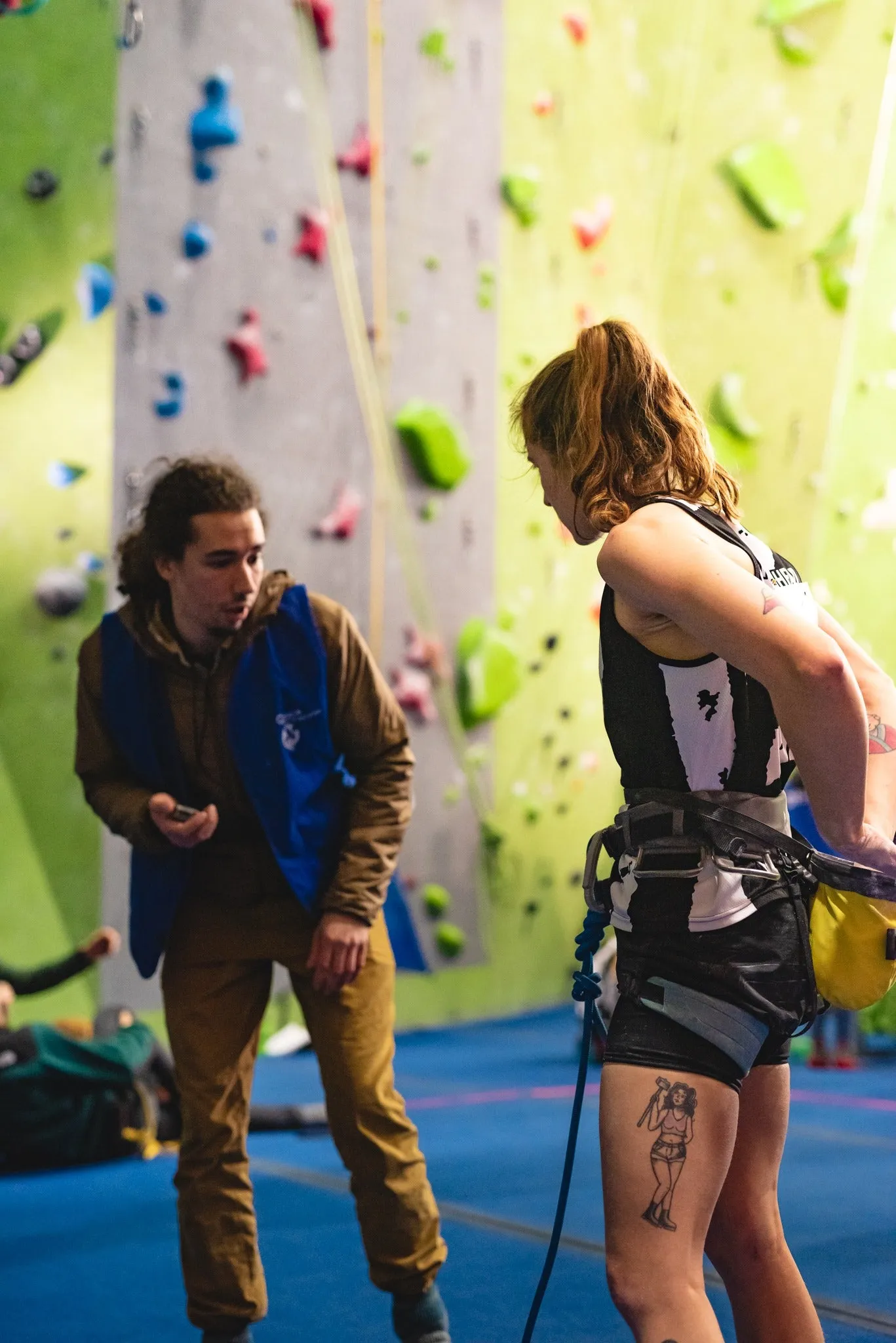
photo Délire Escalade
This is a concept I apply a lot in competition. In front of a boulder, I try to stay focused on what I have to do: how I’m going to do the movements, how I’ll use my time, what knowledge or skills I need to reach for. The result should only be considered at the end, because you have essentially no control over it.
Wondering about how others are performing, about the number of zones or tops, or about the result I’m going to get, only distracts from the task. To manage that, I lean heavily on preparation. Most of my energy doesn’t go on the outcome of a competition or on sending a boulder or a route, but on the process. If you put all the weight into that preparation, mental and physical, and do everything you need to do to succeed, all that’s left is to let go in competition or on the wall. Your body knows what it has to do.
4. Understand your stress
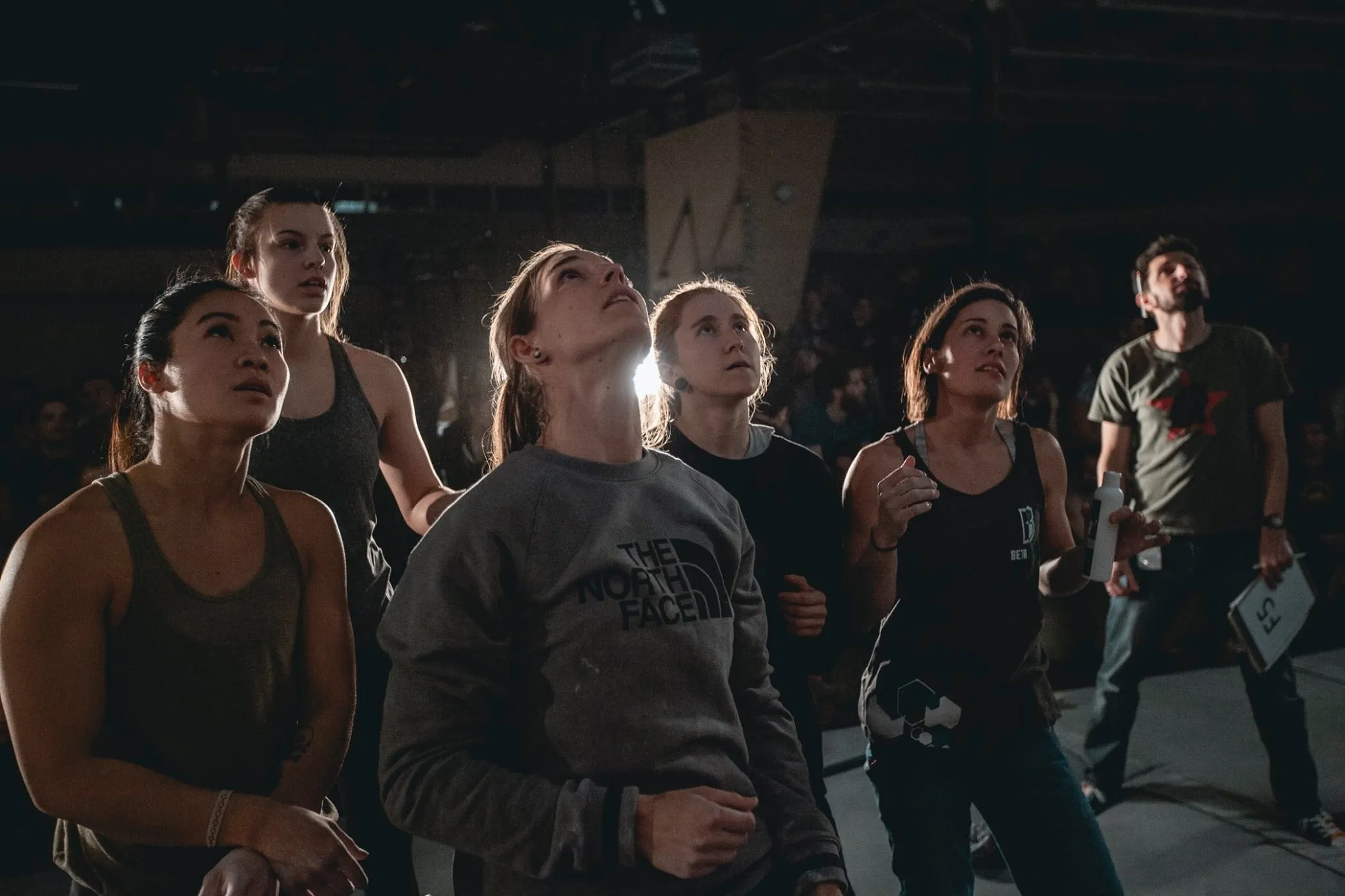
photo Beta Bloc
Stress is such a limiting factor, and unfortunately it affects most athletes. Whether in competition, at a climbing centre or on rock, we all go soft in front of the thing that scares us.
This year I made an effort to better understand the real cause of my stress. I asked myself often: what’s the worst that can happen? Understanding the cause of your stress helps neutralise it. For a lot of people it can even become fun to challenge it. You might take a whole session looking for chances to climb in discomfort, to try things that are too hard, to fail and not be at your best. By getting used to discomfort and difficulty while controlling how you feel inside it, you get stronger in the face of obstacles and performance anxiety drops.
Really it’s about putting yourself in the situation that frightens or stresses you, in a more controlled environment and context: taking deliberate falls to practise landing, or practising falling in front of people if that’s what stresses you.
Finally, it’s important to stay alert to those feelings so you can address them. Sometimes they make you aware of a lack of confidence or something to work on. The stressful situation you’re living through can serve that purpose: practise breathing, calming down, climbing without pressure. The focus can shift from “I’m trying to do the moves” to practising stress-management techniques, so that next time it goes better. It’s difficult, continuous work, but it’s powerful.
5. Change your thinking in the moment
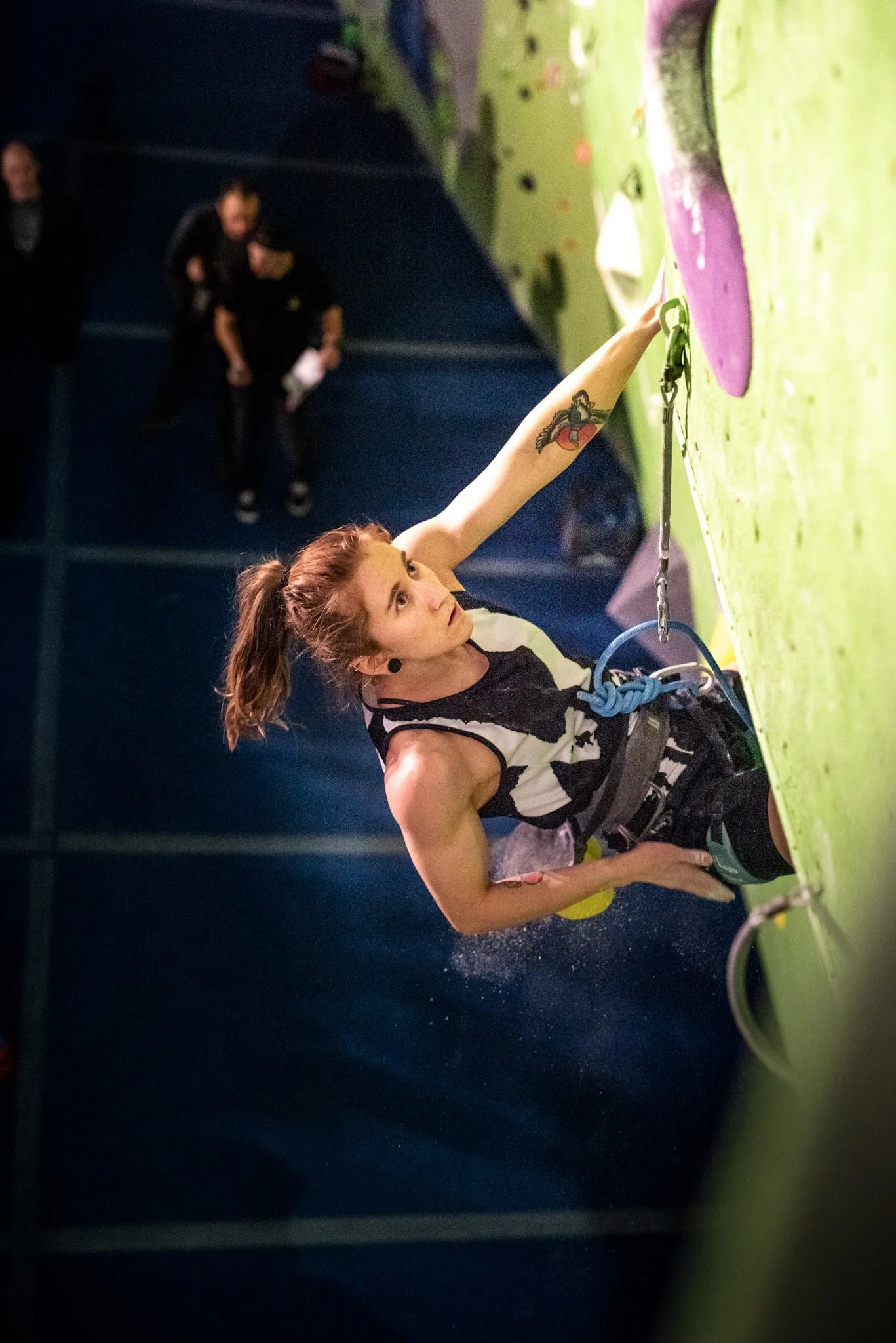
photo Délire Escalade
This one also relates closely to stress. One of the difficulties with the mental side is that it isn’t the most fun thing to work on. We like climbing, or doing pull-ups — but taking the time to change your attitude when you’re getting a bit too frustrated in a session, or to challenge your fear, is less attractive. It’s hard, and if you don’t do it in the moment, you rarely do it at all.
I noticed this season that I’d been telling myself for a long time that my head needed to improve. Then I realised that if I wanted to go further in competition, I had to actually make changes.
Now I sometimes have entire training sessions where I’m only focused on my attitude or my behaviour while climbing. I try boulders or routes I like less, ones where I struggle not to complain. I practise breathing and smiling, seeing the positive.
This year I did it during competitions too. I stopped climbing to take a sip of water and gather myself, telling myself this was an important moment. I’d managed to catch the point where my attitude was turning negative, and it was the perfect opportunity to learn to control that part of my head.
I try to remember what kind of athlete — or even what kind of person — I want to be. I like people who are positive and that’s what I want to give off too. That’s also where I have the most fun. It’s fine to have emotions, and it’s impossible to always have a smile on your face, but I know that doing this work makes me better at climbing and better as a person. It’s cheesy, but it’s really worth doing.

photo Délire Escalade
The work you do on yourself is never really finished. Working on my head was the most important part of my season, and I tried to do it even when it came at the cost of a short-term result. The point was to get rid of my bad habits before starting to push myself to another level.
Whether for competition, indoor climbing or rock, I think the mental side weighs more than we realise among the things that affect our level. Sometimes it’s conscious and sometimes less so, but I’m convinced our stress, our fears and our ego play a very important role in our climbing. So I hope that with these few tips, some people can break through barriers and reduce their mental limits as much as possible — because it’s a good thing to watch yourself reach your full potential and enjoy the process.
For more on training at home, visit the training blog.