Finding and Organising Your Climbing Goals
The first in a series on preparation: Félicien on what careful thinking about your goals actually changes.
Félicien Roy holds a master’s in kinesiology from the Université de Montréal and has been training for more than 10 years. He applies what he studied to his own climbing, as a personal trainer and as an athlete. His ascents include multiple 5.14s and close to a hundred 5.13s. Here he covers a key training concept: how to determine and organise your climbing goals.
“No goal is too big. It’s only a question of time, persistence and putting the effort in the right place.”
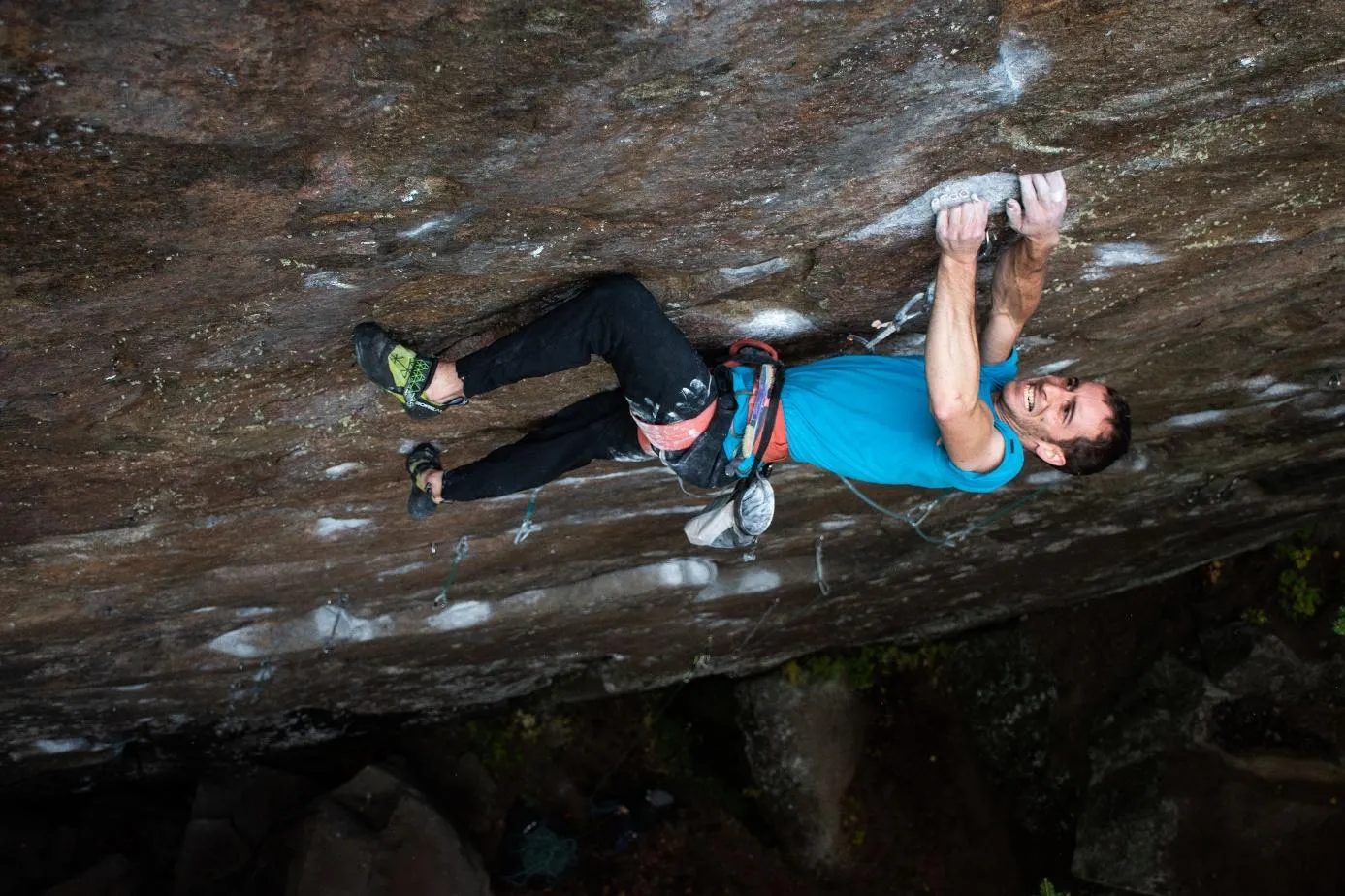
Félicien Roy on Poumon d’acier 5.13d at Sanatorium — photo Amandine Geraud
Training can sometimes look like an accumulation of exercises drawn from all over the place. You’ve read several books, watched a lot of videos, watched and talked to the strong climbers at your gym — and you’ve collected as many methods as there were people and documents. They all seem sound, and they all seem to get results for the climbers using them. But what about for you?
Every one of those exercises is directly connected to the specific goals of the athlete being trained. The choice of each one sits inside a long process of thinking about precise, specific training goals, over a shorter or longer horizon, particular to that person.
If you want to find exercises that suit you and make you progress, you have to identify your own goals. You want to be stronger, of course — but why? By what measure?
This article is meant to help you work out your training goals, sorted into a primary goal and secondary ones, so they can guide your physical preparation.
Working out your goals: brainstorming
This step can take longer than you’d think. Take the time. The thinking is a good investment, because it will guide your training for a long while.
Look far into the future. Ideally, goal planning should be thought through for a minimum of 6 months and ideally a full year. Writing a list of competitions you want to enter, new challenges you want to take on, or any ideas and dreams that come to mind is an excellent starting point.
Write down everything that appeals to you and motivates you. The questions — is it realistic? how do I do it? when? — come later. Take the time to check that these really are your own dreams and not the ones held by people around you.
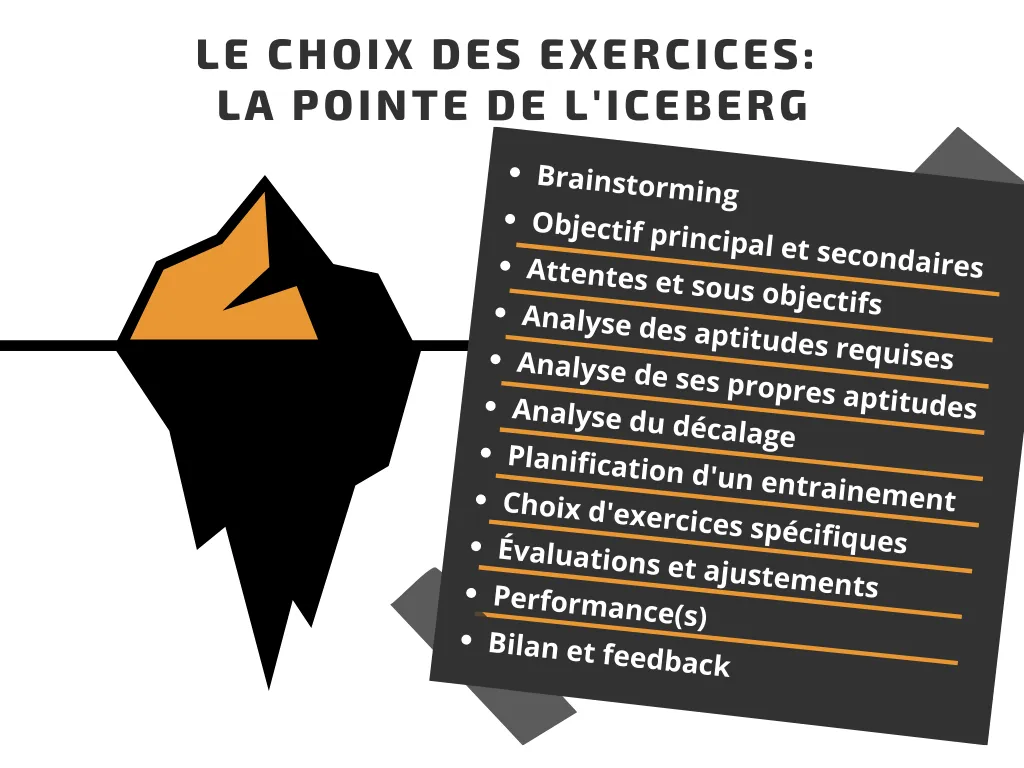
This is a thinking step. Treat it as a draft: don’t hesitate to come back to it several times to fill out your list and let your thoughts develop. This is the base of the iceberg, and every step that follows comes out of it, so it matters that the base is well considered and solid.
Here’s my own list from 2020 as an example: get into trad climbing, do a six-month trip in Spain, visit Potrero Chico for multipitch and El Salto, send my big project at Rumney (Livin Astro 5.14c), send my secondary project at Orford (Sha-sha, 5.13d), explore local crags I’ve barely been to (Orford, Kamouraska) or never been to at all (Sanatorium, Shagg Crag).
Organising your goals: primary and secondary
The second step is sorting by priority. We all want to do a million things, but there isn’t time for all of it. Among the goals you’ve kept, which matter most to you and take priority?
This is also a good moment to drop the dreams that would demand too many concessions, or that are too complicated to reach given your current circumstances. Some goals may get added while others disappear. This second round of thinking moves you toward a sorted list, so you know where your energy needs to go first.
My 2020 list in order of importance, after removing a few goals that will come later:
- Livin Astro at Rumney
- A fun trip to Mexico
- The route Sha-sha at Orford
- Discover the climbing at Sanatorium
- Get into trad climbing
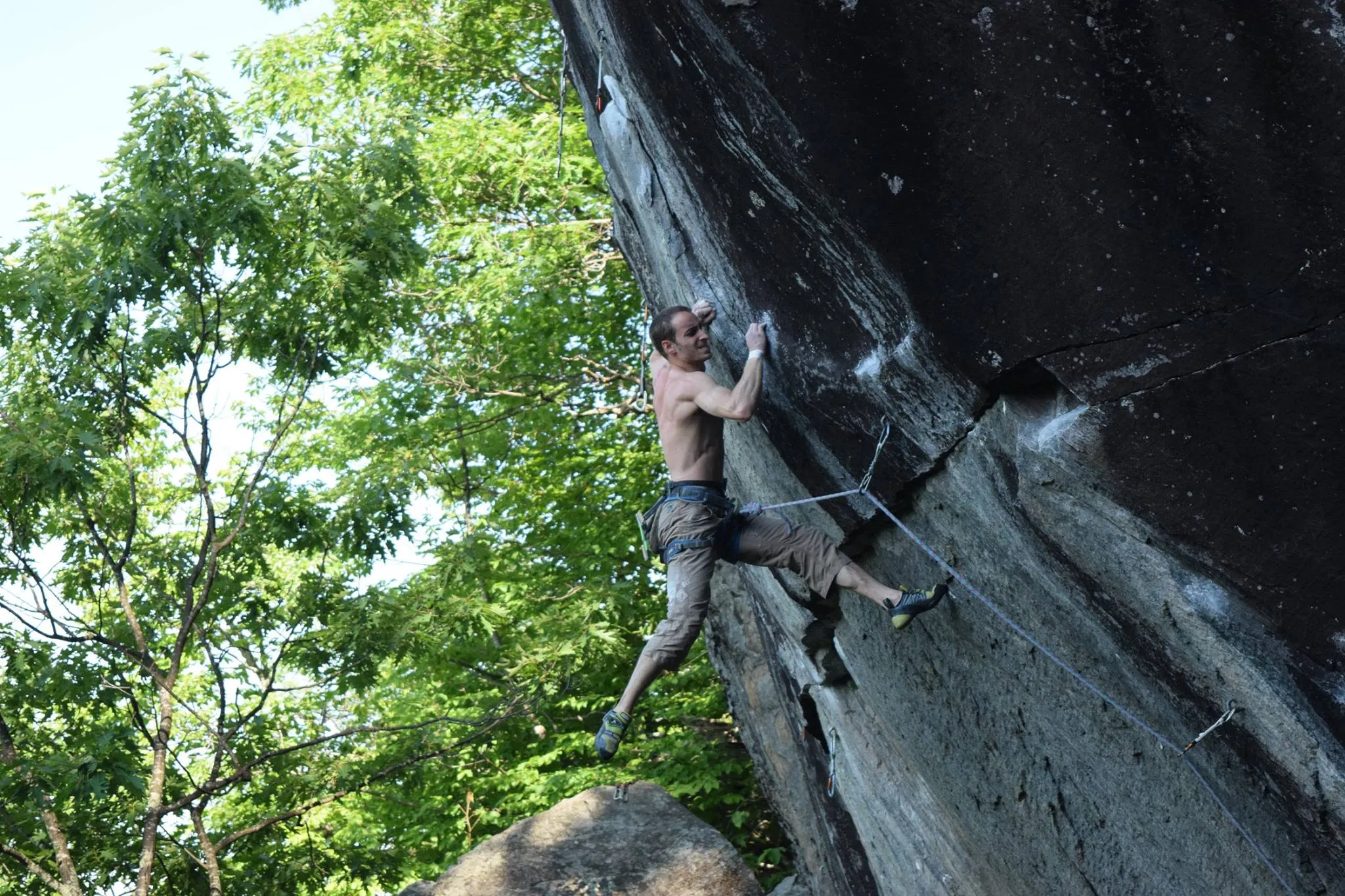
Livin Astro, 5.14c, Rumney
Defining your expectations
The third step is defining, specifically, what you expect from each goal. The more detailed those expectations, the clearer and more precise the path you’ve traced toward it. The risk of drifting off course drops, and if you do drift, you get back faster.
Defining your expectations well also avoids a lot of disappointment. Without clear expectations you can’t know whether you reached your goal, and it becomes easy to think you never progress, or that you could have done better. Each expectation can then be treated as a sub-goal.
Expectations can be qualitative (descriptive) or quantitative (measurable). To my mind the ideal is to combine both.
Taking my Mexico trip goal: it breaks into a week of multipitch at El Potrero and then a week of single pitch at El Salto. Here are my expectations:
- Have fun in the middle of the Quebec winter by climbing as many different routes as possible
- Move up the grades progressively on multipitch and do at least one 12a pitch at El Potrero
- Do as many 5.12a-and-up routes as possible at El Salto, and resist the temptation to project hard routes
- Be self-sufficient on multipitch
Comparing your expectations to your current capabilities
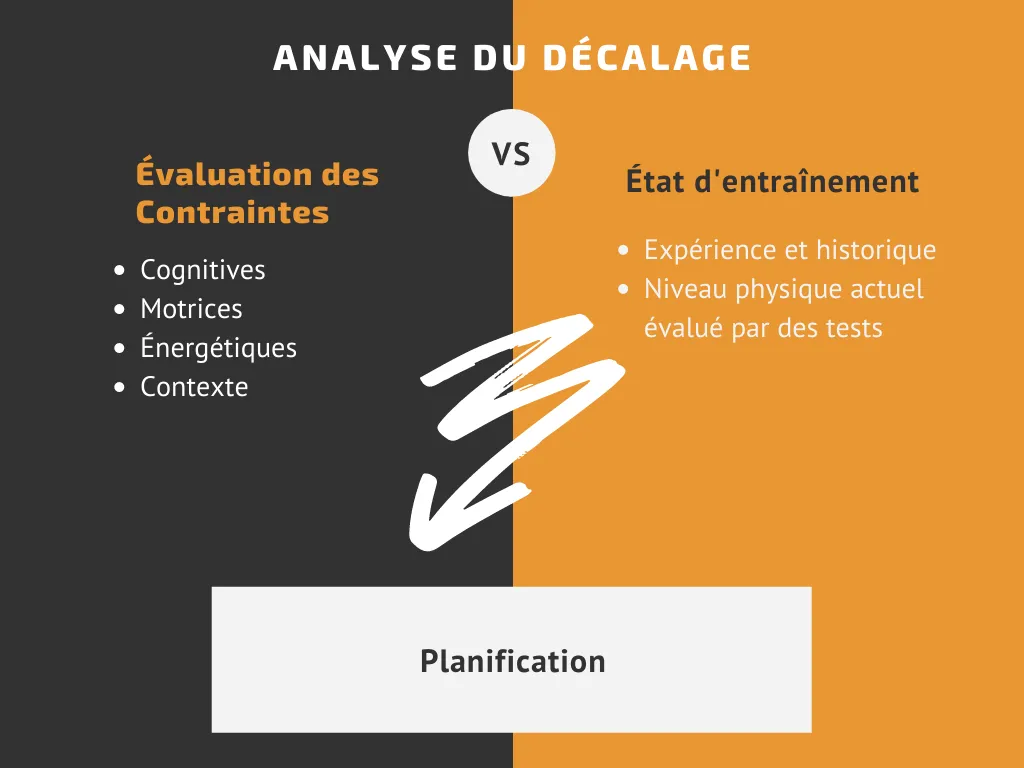
This next step is the key one. Analysing the gap between your current training state and your goals defines the areas of training you need in order to reach each of the sub-goals you set. The time required can then be estimated and the training season planned.
For a goal with a fixed date, like a competition, the expectations may need to be revised if the gap is too large and the training period too short to be realistic.
To see that gap, you need to work out what each sub-goal requires cognitively, energetically, motor-wise and contextually, and set that against your current training state and your experience. Your training state has to be assessed with a series of valid tests — meaning you need to be confident the tests you’ve chosen actually measure the right things.
Building and planning the training that follows
Now you know which strings are missing from your bow. Missing or insufficient abilities — your weaknesses — need to be worked on first.
That doesn’t mean forgetting the abilities you’re already comfortable with. Your strengths have to be maintained and worked alongside the weaknesses, but the time spent on them should be much lower than the time given to what’s missing. Doing the reverse is the classic trap: it’s more pleasant and more reassuring to work on things you’re strong and comfortable at, particularly when other people are watching.
Organise and plan a progressive development of all these abilities over time, so you’re ready to meet the demands on the day. Only once that planning is done does it make sense to choose exercises. Each exercise will have a number of repetitions, a number of sets, a time under tension, a level of technical difficulty, an intensity, a pace — all of it particular, and all of it justified by the plan.
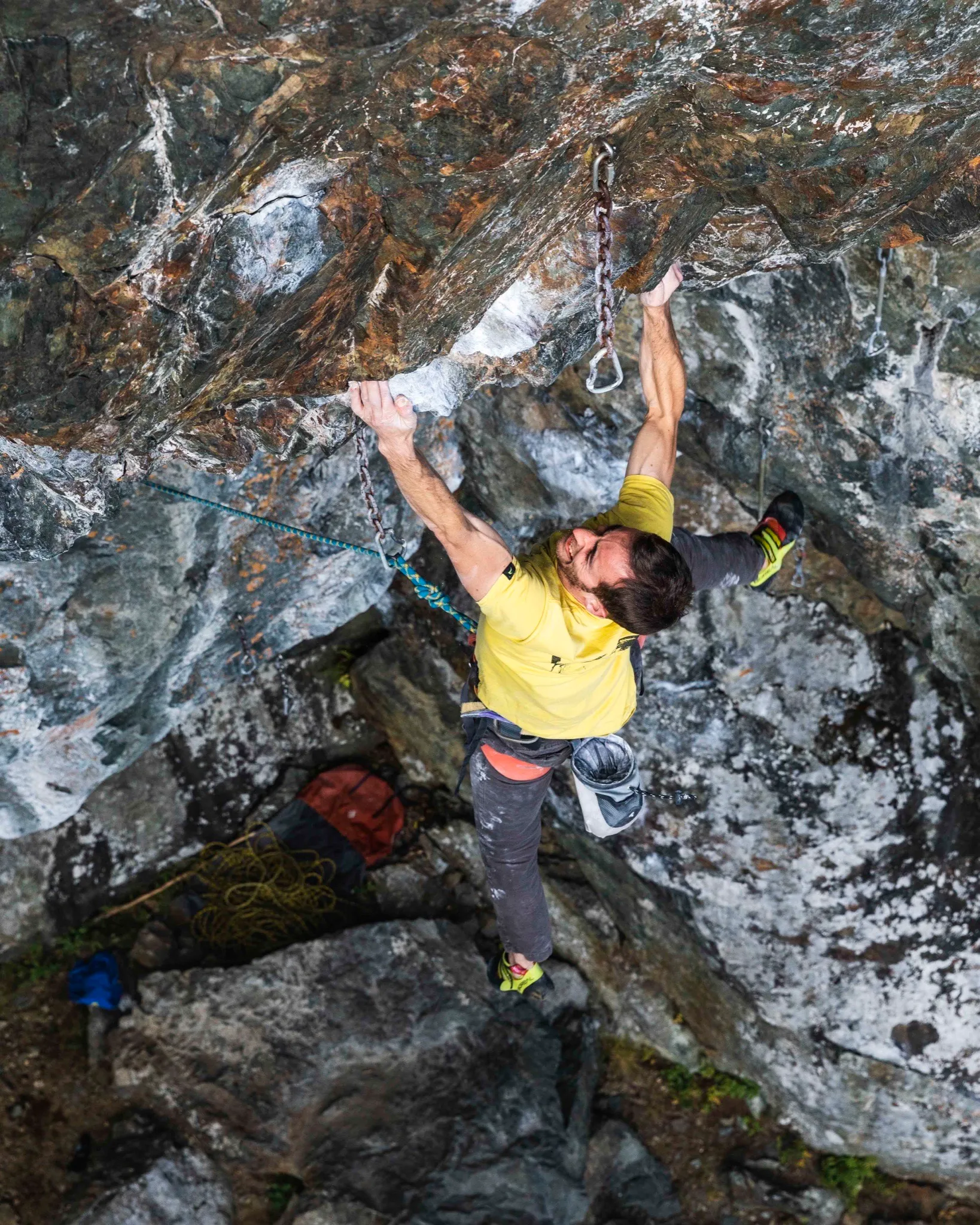
Félicien Roy on Scorecard 5.13d at Orford — photo Mathieu Tranchida
Continuous assessment and adjustment
Training can sometimes go faster, or slower, than you thought and planned. The same tests you used for the initial assessment need to be repeated to measure improvement and the rate of progress.
Make sure the tests are reliable: they have to be repeated under identical conditions — warm-up, measurement tool, fatigue state — to the original ones.
Unpredictable events (injury, a pandemic, climbing centres closing) can also challenge whether you reach your goals. Those shouldn’t call the goals themselves into question. It isn’t the goal that changes, but the means deployed to reach it and, eventually, how those means are laid out over time. Continuous adaptation of how your training is organised is part of the process.
The performance
After long months of preparation comes the performance itself. It might be very short, like an onsight or flash attempt, or longer, as with a climbing trip abroad.
When that time comes, all the questions about your planning and your training have to be set aside. This is the moment to execute and to enjoy it. You shouldn’t doubt any of what you worked on and accomplished in training up to that point. It’s simply time to give 100% of what you have — whatever it is you have. The questions can be asked after the performance has happened.
After the performance, the work continues: self-assessment
This is an important step for making progress over the long term, and one that often gets forgotten. Once the performances are done or the season is over, you need to take stock. The small and large victories, and the failures of the season, deserve to be brought out and questioned:
- Was each goal and sub-goal reached, nearly reached, or not reached at all?
- Do you want to keep working on the goals that haven’t been reached yet?
- Did you overestimate or underestimate the goals?
- Did you overestimate or underestimate your ability to meet them?
- Did the training you did seem effective, in terms of the plan, of sticking to the plan, and of the exercises chosen?
- Was your plan followed to the letter?
All of this makes you better for your next training season.
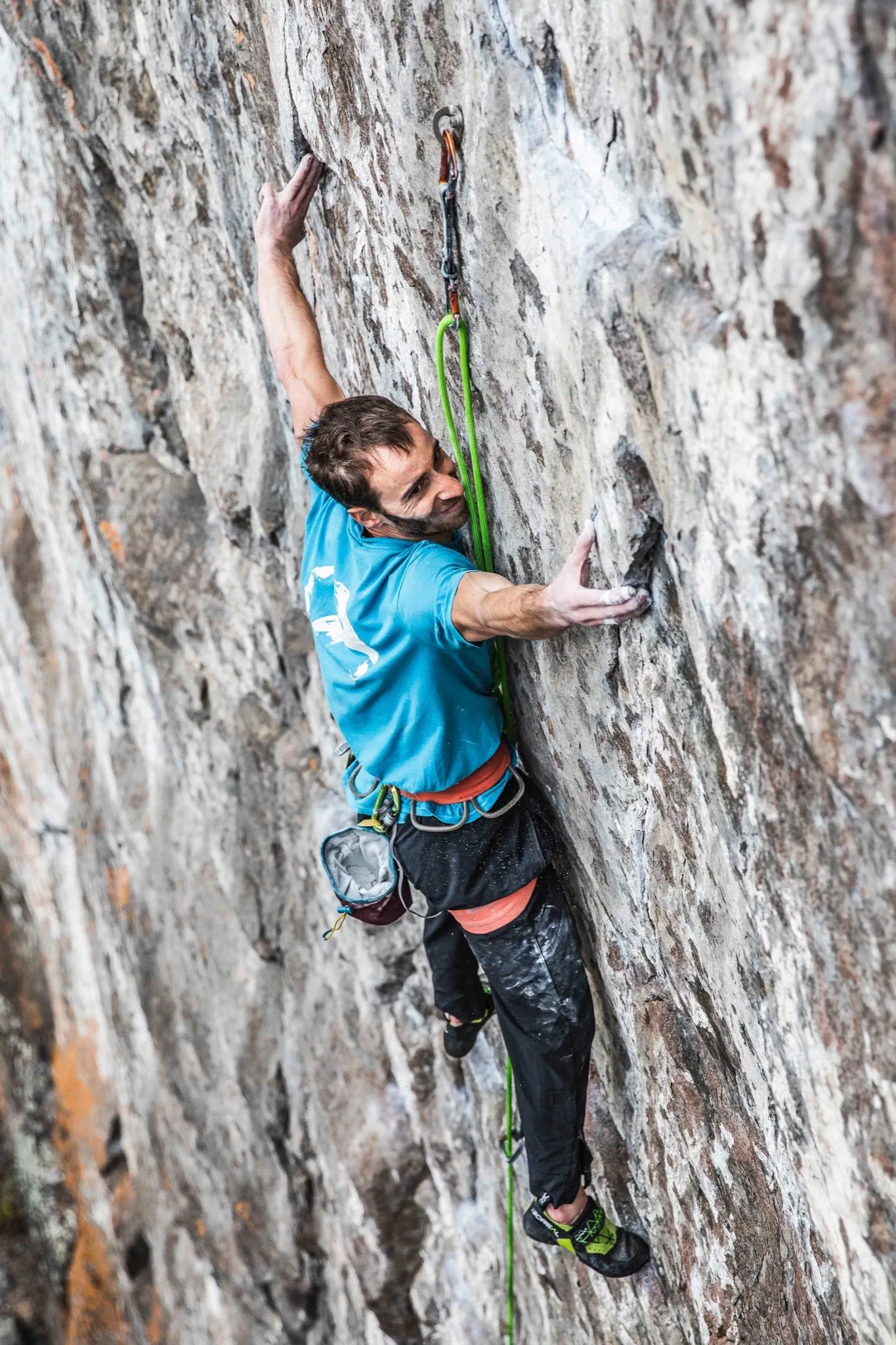
Félicien Roy on 5 km extension, 5.13d, Weir — photo Mathieu Tranchida
Conclusion
Determining training goals and precise expectations is central to designing training. It creates a through-line that stops you drifting too often into training that may be enjoyable but is less relevant to your progress and your goals.
Once the goals are set it becomes easier to build a plan that is adapted and personalised, putting every chance on your side of performing when you want to.
This search for goals is key to long-term motivation, because every session then sits inside a rigorous plan and has a precise reason to exist. Knowing the why of every session, at any point in the year, is what gives you the strength to do it. Each session becomes a piece of the puzzle guiding you step by step toward the goal you’re dreaming about.
The strategy described here is the one I use and like. It is certainly not the only one. Read up on the different approaches and keep the one that suits you best. Don’t hesitate to get guidance from a movement specialist for one or several of the steps described. More and more kinesiologists, coaches and professionals from different backgrounds are working in climbing centres and will know how to support you through your training cycles.
Thanks for the support in my climbing to:
@Borealoutdoor · @Digitclimbing · @Entralpi · @CruxEscalade



The 2020 plan appears to have worked out for Félicien:
- He did his first 13a multipitch at El Potrero Chico — “Time for Livin’” 12b, 12b, 12a, 12c, 13a, 12c — sending every pitch except the last.
- He did 19 routes of 12a and above, including three 5.13s, in 10 days at El Salto.
- With the United States closed, he replaced his Livin Astro 5.14c project with local ascents and managed 9 routes of 5.13d in 6 months.
- He also discovered ice climbing, an activity he never thought he’d enjoy as much as he did.
You can reach him @felicienroy on Instagram to find out more about training and his coaching.