Aerobic Endurance Training on the Hangboard
Updated 5 min read Endurance and pump Félix Bourassa-Moreau
On this page
Train the pump that won’t go away with easy intermittent hangs: 10 seconds on and 5 off at 30 to 40% of your max, just below your critical force, for 5 to 10 minutes a set. Keep wall climbing as the base. That load is my practice; the trials tested heavier ones.
What is aerobic endurance training?
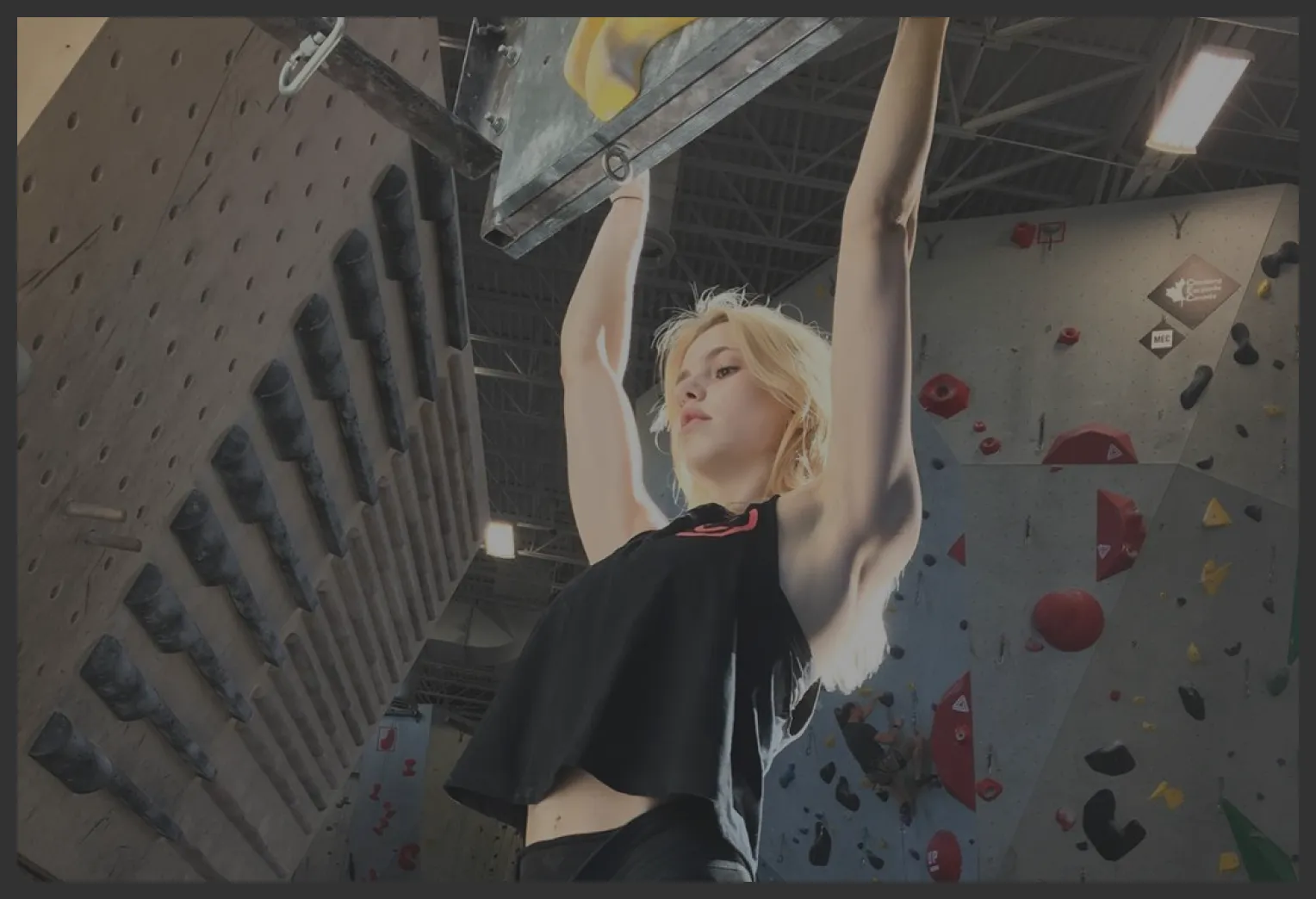
You’ve just passed the crux and the rest of the route is easy for you. But the pump won’t go: after a minute on the jug, the tiredness comes back at once, and on the last move your fingers reach the hold and don’t close. That is probably not a strength problem. Your fingers held those holds ten minutes earlier; your forearms were using up more than they could resupply.
Picture from Yves Gravelle.
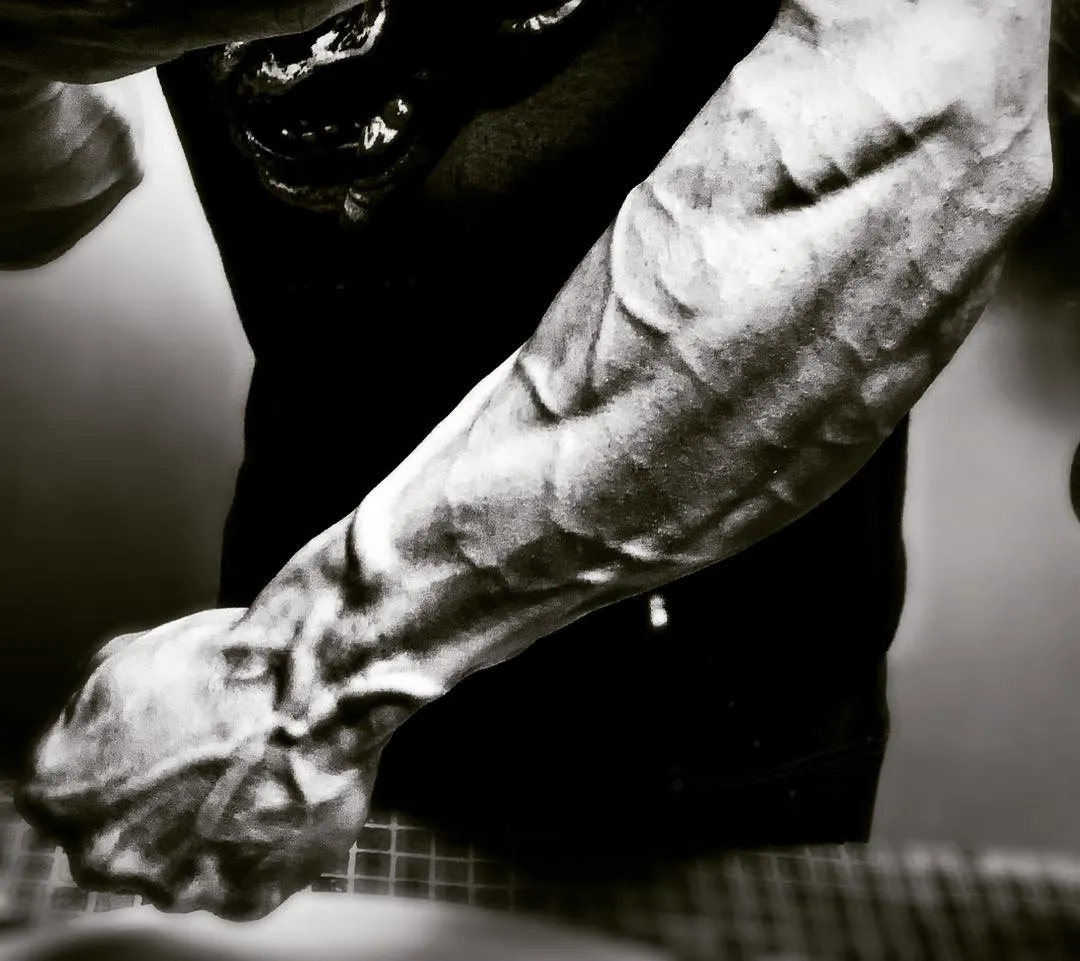
“Endurance” covers two adaptations that need different loads. The aerobic base, at 30 to 40% of max and below critical force, aims at recovery and blood flow during and between efforts. Strength-endurance, at 60 to 80%, sets how long you hold a hard position before failing; repeaters train it. The full zone table is in finger endurance training.
How do you train the aerobic base?
| Aerobic base on the hangboard | |
|---|---|
| Load | 30 to 40% of your max. It should feel easy for the first two minutes; if you are gripping hard, the load is too high |
| Hang / rest | 10 s on, 5 s off |
| Set | 5 to 10 minutes |
| Set the load with a force plate | Pull as hard as you can for 5 seconds to get your max, then hold 30 to 40% of that number. Watch it: the band is narrow and you drift above it as you tire |
| Set the load without one | The minute test: a load you can hold continuously for a full minute with effort left over. A rough guide, not a validated test. Keep your feet on the ground and take weight off the holds until you find it |
| Frequency | One or two days a week, kept easy, or as a block before a strength cycle, a climbing trip or an event |
| Not before | A climbing or strength session: you would do both worse |
| Stop | If a finger hurts |
No-hangs, with your feet on the floor, make the load easier to dial in than full hangs with added or removed weight: you adjust mid-set instead of stopping. Warm up first (warm-up routine).
On the wall, aim for movement as continuous as possible, well below your limit: four routes without rest, four times over; ten boulders back to back; or circuits on a training wall. Wall work is the most specific option and should stay the bulk of your endurance training. The hangboard adds speed and a controllable intensity, and it is almost purely physical, so a bad movement day doesn’t spoil the stimulus.
Why does it work, and how sure are we?
Climbing is intermittent: each time you relax your grip to reach the next hold, blood gets in, delivers oxygen and carries metabolites out. How well that works sets how much you recover on rests and between tries. I used to say it depends on capillary density; that is a reasonable physiological story, but I found no trial showing that this protocol changes capillary density in climbers. What has been measured is close: after an 18-week bouldering programme, novice climbers improved forearm blood flow and their hangboard time (da Silva et al., 2026). Endurance matters for climbing: in a 2025 study of 307 climbers, intermittent finger endurance was the second strongest predictor of climbing ability after finger strength (Berta et al.).
The aerobic zone ends at critical force, the highest intermittent force you can sustain for a long time. In climbers it averaged 41% of maximum voluntary contraction (Giles et al., 2019), and climbers hold a measured critical force for minutes, not indefinitely, so the 30 to 40% band sits just under it on purpose. The critical force test explains how to estimate yours.
A 2022 randomised trial in Frontiers in Sports and Active Living put 54 experienced climbers through four weeks of hangboard work, twice a week on a 12 mm hold, at 100%, 80% or 60% of max, against a control group. The 80% and 60% groups improved stamina and endurance; the 100% group did not. The 100% and 80% groups improved maximal strength; the 60% group did not (Devise et al.). Intensity selects the adaptation. The trial’s lowest load was 60%, so the 30 to 40% band is practice, not proof.
Who is it for?
Anyone whose pump builds on long routes or doesn’t clear on rests, and anyone building a season. Because the intensity is so low, I find it recovers fast and stacks well with everything else; that is my experience, not a measured result.
Do this in Entralpi
The max strength test measures your max; keep it with one tap at the end of the test, or type it in Settings (Profile, then Settings, under Physical Profile, Max strength), and a load in % max becomes kilograms. The endurance test gives your critical force and a sustainable force, which endurance, recovery and rehab workouts use. The app’s critical force is the average of the peaks of your last pulls in the all-out test, so it reads higher than the critical force in the research: keep aerobic work below it. Then start a workout from the Train tab or build your own with 10 seconds on and 5 off. Without the plate, the timer runs the intervals and you use the minute test for the load.
Sources
- Devise M, Lechaptois C, Berton E, Vigouroux L (2022). Effects of different hangboard training intensities on finger grip strength, stamina, and endurance. Frontiers in Sports and Active Living.
- Giles D, et al. (2019). The determination of finger-flexor critical force in rock climbers. International Journal of Sports Physiology and Performance.
- Berta P, et al. (2025). Validity and normative scores of finger flexor strength and endurance tests estimated from a large sample of female and male climbers. Journal of Sports Sciences, 43(3).
- da Silva JMR, et al. (2026). Forearm blood flow and vascular conductance improve after 18 weeks of bouldering training in novice climbers. Frontiers in Sports and Active Living.
Was this helpful?
Thank you. It tells us which articles to improve.
Sorry this did not answer your question. Write to us if you need an answer, or try the search above.
Thank you. It helps us improve this page.